tag:ifso-erg.nd.edu,2005:/newstag:ifso-erg.nd.edu,2005:/latestIndigenous Faculty and Staff Organization | News2026-08-25T11:25:00-04:00tag:ifso-erg.nd.edu,2005:News/1850472026-08-25T11:25:00-04:002026-08-25T11:25:26-04:00Raclin Murphy Museum of Art launches a new free Digital Guide to the Museum’s collections
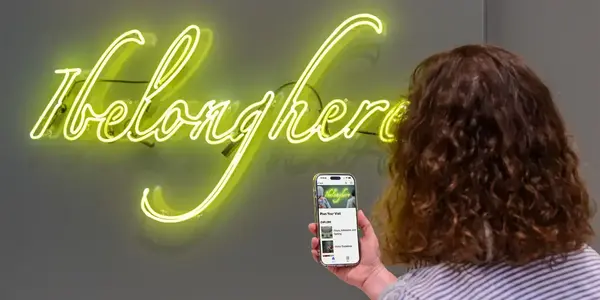
Notre Dame, IN: The Raclin Murphy Museum of Art is delighted to launch a new digital guide in partnership with Bloomberg Connects, the free arts and culture app. The new digital guide is easy to use and will enrich both on- and off-site visits. The Raclin Murphy Museum of Art now can be found on the Bloomberg Connects app, which is available for free download from the App Store, or Google Play, or, via this QR code.
This guide joins hundreds of cultural institutions around the globe. Beyond unique content, the guide offers tools to enhance in-person visits. It is designed with a variety of built-in accessibility features including voiceover, captions and audio transcripts, image zoom, font size adjustment, and Google Translate integration in 60 languages.
“For the enrichment of campus and community, we are honored to be working in partnership with Bloomberg Connects,” shares Joseph Antenucci Becherer, Director of the Raclin Murphy Museum of Art. “Such partnerships underscore that we are here to serve and welcome all.”
The app will allow visitors to the Raclin Murphy Museum to turn their phones into a hands-free experience and a centralized place for important information. Off-site, it will let users explore the Museum and other cultural institutions from anywhere, providing information about the collections, artists, and special highlights.
The Raclin Murphy Museum of Art
With origins dating to 1875, the Raclin Murphy Museum of Art (formerly Snite Museum of Art) is one of the oldest and most highly regarded university art museums in America. The renowned permanent collection contains more than 31,000 works representing many cultures and periods of world art history.
Through its collections, exhibitions, and programs, the Museum serves and welcomes all to engage in wonder, spiritual reflection, inquiry, and research. For more information, visit raclinmurphymuseum.nd.edu.
Media contact:
Gina Costa Communications Program Director Raclin Murphy Museum of Art gcosta@nd.edu
]]>
Gina Costatag:ifso-erg.nd.edu,2005:News/1850482026-08-25T11:25:00-04:002026-08-25T11:25:47-04:00First comprehensive look at breast cancer in Native American women reveals key genetic differences
Researchers from the University of Notre Dame have published the first known detailed study of breast cancer tissue from Native American women. The study, published in npj Precision Oncology, reveals important molecular differences that may impact the efficacy of therapies for female, Native American breast cancer patients.
Breast cancer rates in Native American women are low compared to white women, yet Native American women have higher mortality rates. Although the overall breast cancer death rate has declined, it has remained stagnant for Native American women.
“The largest breast cancer database in the world, The Cancer Genome Atlas, contains more than a thousand breast cancer patients — and only one of them is Native American. That means today’s treatments and tests have effectively been built using data from other populations, and then assumed to work equally well for everyone,” said Jun Li, a corresponding author of the study and professor in the Department of Applied and Computational Mathematics and Statistics at Notre Dame. “Our study is the first to look closely at the biology of breast tumors in Native American women, and it's overdue.”
Researchers compared the genetic makeup of 17 Native American breast cancer tumor tissues to nearly 700 breast cancer tissues from white women from The Cancer Genome Atlas. Breast cancer tissue from Native American women in the study showed differences in which genes carried mutations, how the tumors used their DNA and which genes were turned on or off.
Many of those differences pointed to the immune system. Li said that tumors from Native American women compared to those from white women appeared to “hide” from the body’s immune defenses in fundamentally distinct ways. Researchers also found differences in the genes that protect against DNA damage.
Professor Jun Li (Photo by Matt Cashore/University of Notre Dame)
“We found differences at every level we looked at. Several genes were mutated much more often in tumors from Native American women than white women, including some that are critical for the immune system to recognize cancer cells. A few of these immune-related genes were mutated only in Native American patients,” Li said.
Overall, these differences may affect how patients respond to immunotherapies and chemotherapies. However, Li explains the study is meant “to generate hypotheses, not change treatment guidelines.” More research is needed to determine the multiple factors that may impact Native American mortality rates including genetic, environmental, socioeconomic or other determinants.
This is the first study part of a new research focus from Notre Dame’s Harper Cancer Research Institute that aims to collect tumor tissues from populations typically underrepresented in cancer research. The goal is to help fill gaps in the understanding of cancer biology.
“This research focus goes really hand in hand with the University’s mission to be a powerful means for doing good by working with underserved communities with worse cancer outcomes,” said Sharon Stack, the Kleiderer-Pezold Professor of Biochemistry at Notre Dame, the Ann F. Dunne & Elizabeth Riley Director of the Harper Cancer Research Institute and a corresponding author of the study. “While there may be many social determinants of health at play, at Harper we want to investigate if there are differences on the molecular level that impact cancer incidence and outcomes.”
Sharon Stack, Kleiderer-Pezold Professor of Biochemistry at Notre Dame (Photo by Barbara Johnston/University of Notre Dame)
The program will also continue collecting cancer tissues from partnering Native American communities, focusing on the cancer types that may be most prevalent for them, as well as collecting breast cancer tissues from other underrepresented populations such as Panamanian and Kenyan women.
The tissues will be sent to the Harper’s biosample repository and processed through their tissue banking service, which serves as a resource for researchers and doctors in South Bend and beyond.
“When you study a population that has been left out, you often discover biology that nobody knew was there,” said Li, also affiliated with the Harper Cancer Research Institute. “Those discoveries sharpen our understanding of cancer and ultimately, improve care for everyone.”
The lead author of the study was Fangfang Guo, a graduate student in Jun Li’s lab. Laurie Littlepage, the Campbell Family Associate Professor of Cancer Research at Notre Dame, also co-authored the study.
The study was funded by the Ryan Gee Excellence Fund for Cancer Research with additional support from the National Cancer Institute and Department of Defense Breast Cancer Research Program Breakthrough Award.
Contact: Brandi Wampler, associate director of media relations, 574-631-2632, brandiwampler@nd.edu
Originally published by Brandi Wampler at news.nd.edu on May 27, 2026.
]]>
Brandi Wamplertag:ifso-erg.nd.edu,2005:News/1744152025-08-20T12:40:00-04:002025-08-20T12:40:49-04:00Pokagon Band Kee Boon Mein Kaa Annual Pow Wow - Aug 30 and 31
The Pokagon Band of Potawatomi will be hosting their annual Kee Boon Mein Kaa Contest Pow Wow on Aug 30 and 31. The Pow Wow will be held at the Rodgers Lake Campground in Dowagiac, MI. This is a great opportunity to learn more about Anishinaabe culture and enjoy some wonderful dancing, food, vendors, and community. There are Grand Entries on both Saturday and Sunday: Saturday, 1 & 7 p.m. and Sunday, 1 p.m.]]>
Hali Murphytag:ifso-erg.nd.edu,2005:News/1735692025-06-26T12:04:30-04:002025-07-14T14:59:36-04:00Notre Dame Religious Liberty Clinic files amicus brief to support Indigenous efforts to protect sacred site in Texas
Last week, Notre Dame Law School’s Lindsay and Matt Moroun Religious Liberty Clinic filed an amicus brief in a case before the Supreme Court of Texas, advocating for the protection of a sacred Indigenous site in San Antonio. The brief, filed on behalf of the International Council of Thirteen Indigenous Grandmothers and Carol Logan, an elder from the Confederated Tribes of Grand Ronde, supports two plaintiffs who seek to preserve the sacred area surrounding a bend in the San Antonio River, known as the Yanaguana. This site holds profound spiritual significance for members of the Lipan-Apache Native American Church and other Indigenous groups.
The sacred site is central to the Coahuiltecan creation story and is the only place where certain religious ceremonies involving the river, sacred trees, and nesting cormorants can be performed. The site, however, is threatened by a proposed retaining-wall restoration project by the City of San Antonio, which would remove the sacred trees and disturb the nesting cormorants, destroying the area's spiritual ecology.
Although the case was filed in federal court, the U.S. Court of Appeals for the Fifth Circuit recently certified a question of state law to the Supreme Court of Texas, seeking its view on a 2021 state constitutional amendment protecting religious services. In its amicus brief, the Clinic sought to provide guidance on the meaning of the amendment and highlighted the long history of governmental disregard for Indigenous sacred sites.
Notre Dame law students Annie Ortega, Jessica Smith, Steven Tu, and Breck Giltner drafted the brief under the supervision of Professor John Meiser, director of the Religious Liberty Clinic, and Domenic Canonico, a legal fellow at the Clinic. The Clinic filed the brief alongside Notre Dame Law School alumnus Rob Dunikoski (‘05), a partner at Castañeda + Heidelman LLP in Dallas, Texas.
Smith explained that “this case was particularly interesting to work on because it involved a never-before-interpreted provision of the Texas Constitution.”
“It was an honor to participate in this case by providing some interpretive guidance that may help the court decide this matter of first impression,” Ortega said. “I am optimistic that the court will honor the people’s decision to afford greater protections for religious services in Texas.”
“It is rare for a lawyer, or even a judge, to have the chance to help interpret a new constitutional provision for the first time,” said Meiser. “I am thrilled that our students have that opportunity even while they are still in school – and that they are able to do so in support of such vital needs of our clients and people of all religious beliefs.”
The Clinic's brief urges the Supreme Court of Texas to reject an artificially narrow interpretation of the 2021 amendment, warning against constricting it in ways that could especially disadvantage Native American sacred practices. The brief reflects the Clinic’s commitment to advocate for religious liberty for people of all faiths, especially those that may be misunderstood or overlooked.
“Religious freedom is a fundamental aspect of human dignity,” said Canonico. “It’s important to ensure that people of all faiths enjoy the full and equal protections of religious liberty laws.”
The amicus brief was filed on behalf of the International Council of Thirteen Indigenous Grandmothers and Carol Logan.
The International Council of Thirteen Indigenous Grandmothers is a global alliance of Indigenous elders who come together in prayer, education, and healing for Mother Earth. The members are united by their shared mission to protect Indigenous ways of life and to preserve the lands where Indigenous peoples live and upon which their cultures depend.
Carol Logan is an elder from the Confederated Tribes of Grande Ronde and a lineal descendant of the Clackamas People. She has advocated to prevent the federal government’s seizure and destruction of sacred lands in Oregon — including a sacred site that the government seized and destroyed to expand a highway, only to later admit that destruction was totally unnecessary. Logan seeks to prevent similar unnecessary destruction from happening along the Yanaguana.
About the Notre Dame Law School Religious Liberty Clinic
The Lindsay and Matt Moroun Religious Liberty Clinic is a teaching law practice that educates, forms and prepares Notre Dame law students to become the rising generation of religious liberty leaders by training students in the practice of the law as they defend religious freedom for all people.
Under the guidance of law school faculty and staff, students work on a broad variety of legal matters to promote religious freedom on behalf of individuals and organizations of all beliefs—both domestically and abroad. The clinic represents clients from all faith traditions to promote not only the freedom for people to hold religious beliefs but also their fundamental right to express those beliefs and to live according to them. Learn more about the work of the Clinic here.
]]>
Elyse Paultag:ifso-erg.nd.edu,2005:News/1735682025-06-26T12:04:09-04:002025-06-26T12:04:09-04:00Renowned Indigenous Artists and Curators to Speak October 3rd and 4th
The Raclin Murphy Museum of Art is delighted to announce an upcoming symposium on Indigenizing museum spaces to be held on October 3 and 4, 2024. The symposium will feature prominent Indigenous artists and curators who will attend classes, meet students, and offer artist demonstrations on Thursday, the day before the October 4th symposium, as part of the Museum’s commitment to providing Notre Dame students with access to leading artists and museum professionals. On Thursday night, from 5:00 until 7:00 p.m., artists will host artist demonstrations at the Raclin Murphy Museum of Art. All are welcome to join to meet and watch the artists demonstrate their craft.
The all-day symposium on Friday will be held in the Annenberg Auditorium of the Snite Research Center in the Visual Arts from 9:30 AM through 5:30 PM and is open to everyone.
Originally published by Raclin Murphy Museum of Art at raclinmurphymuseum.nd.edu on September 25, 2024.
]]>
Raclin Murphy Museum of Arttag:ifso-erg.nd.edu,2005:News/1735672025-06-26T12:03:48-04:002025-06-26T12:03:48-04:00Studying Indigenous-Catholic pilgrimage: Five questions with Cushwa postdoc Melissa ColesMelissa Coles joined the Cushwa Center in summer 2024 as a postdoctoral research associate. A historian of 19th- and 20th-century North America, Coles specializes in the intersection of Catholicism, Indigenous traditions, the environment, and sacred places. Her current research focuses on two Indigenous-Catholic pilgrimage sites: el Santuario de Chimayó, a shrine famous for healing dirt located in contemporary New Mexico, United States, and Lac Ste. Anne, a shrine renowned for healing water located in contemporary Alberta, Canada. Coles earned her Ph.D. in history from the University of Notre Dame, where she also received her B.A. in honors anthropology and peace studies. She earned her M.Div. at Harvard Divinity School. Before pursuing graduate studies, she worked for three years as a school librarian and teacher at Saint Michael Indian School.
In July, Shane Ulbrich corresponded with Coles about graduate school, her dissertation, and the year ahead.
Shane Ulbrich: Both Notre Dame and the Cushwa Center are well familiar to you, as a “double domer.” Tell us about your graduate school experience here at Notre Dame.
Melissa Coles: Wonderful, generous scholars shaped my Notre Dame graduate school experience. To name a few people and groups, I am grateful for the invaluable support and guidance of my advisor—Thomas Tweed—and my committee—Jon Coleman, Rosalyn LaPier, and Timothy Matovina. I found working groups that fostered space for growth and community—especially the Colloquium on Religion and History, the U.S. in the World Working Group, and the Women, Gender, and Sexuality History Working Group. I also was privileged to take part in the life of several institutes—including the Ansari Institute for Global Engagement with Religion, the Cushwa Center for the Study of American Catholicism, and the Kellogg Institute for International Studies. I believe that healthy communities are essential components of living a good life. So I search for and create community in all aspects of my life, and Notre Dame has been a generative intellectual community for me.
SU: Tell us about your dissertation. You recently defended, in April—congratulations! How did you arrive at the topic?
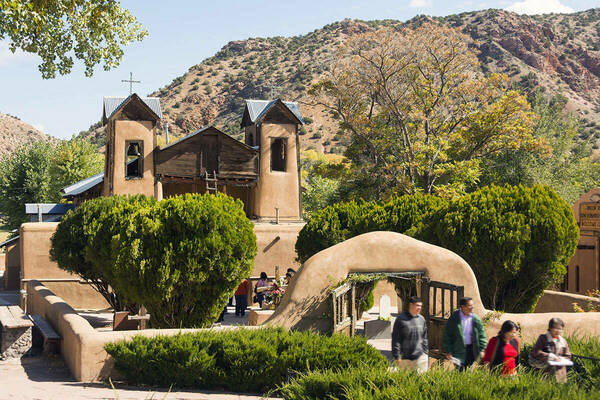
El Sanctuario de Chimayó. Photo by John Elk III, 2013.
MC: Thank you! My dissertation, “Dirt, Water, and the Search for Healing: The Contested Histories of Indigenous-Catholic Holy Sites in the North American West, 1810–2022,” focuses on two pilgrimage places—el Santuario de Chimayó, a shrine famous for healing dirt in contemporary New Mexico, United States, and Lac Ste. Anne, a shrine renowned for healing water in contemporary Alberta, Canada. I examined these sites because I am interested in the histories of Catholicism, Indigenous traditions, the environment, and sacred places. These themes are interwoven throughout el Santuario de Chimayó and Lac Ste. Anne’s 19th-, 20th-, and 21st-century histories.
SU: What was your favorite chapter to write?
MC: Picking a favorite chapter is difficult! If I had to choose, though, I would say the final chapter of my dissertation was my favorite to research and write. That section covered the period of 1970 to 2022. I was able to bring together oral histories, archival research, and participant observation as the chapter’s source base. I think utilizing mixed methods creates a richer source base and more robust argument, and it is fun. For example, at the Catholic Historical Research Center of the Archdiocese of Philadelphia, I found documentation about a late-20th-century group undertaking a Chimayó pilgrimage for environmental reasons. Then, when I attended the American Catholic Historical Association annual meeting, I met and interviewed someone who helped organize this pilgrimage. This collaborator shared more details and a different perspective on the movement than the archived documents provided. I enjoyed bringing these two perspectives together to portray a richer picture.
SU: Notre Dame has been an intellectual home for you from undergraduate years to graduate school and now for a postdoc. Tell us about your experience with the Cushwa Center before now, and your decision to apply for this fellowship at Cushwa.
MC: I count myself lucky to have found such a rich intellectual home at Notre Dame! My interest in pilgrimage was sparked during my B.A. studies in anthropology and peace studies. Then, Brian Collier and the Center for Social Concerns connected me with Saint Michael Indian School, where I worked for three years. At Saint Michael’s, my interest in interreligious, and especially Indigenous-Catholic, pilgrimage traditions developed. During my M.Div. at Harvard Divinity School, I explored these traditions through a theological lens, and during my Ph.D. at Notre Dame, I expanded my focus to a historical lens. My training in anthropological, peace studies, theological, and historical methods has shaped me into the scholar I am today.
During my graduate work, I found the Cushwa Center to be a robust intellectual community. I appreciated how supportive the center was of scholars at all stages of their careers, and I enjoyed the center’s continual schedule of interesting events. I especially looked forward to each semester’s Jay P. Dolan Seminar in American Religion. I was inspired by the work of the Gender, Sex, and Power Symposium, and I am grateful for the Mother Theodore M. Guerin Research Travel Grant Program, which helped fund my research trips to New Mexico and Alberta. The Cushwa Center also gave me the opportunity to publish. My first publication—a review of Simon Coleman’s Powers of Pilgrimage–is in the American Catholic Studies Newsletter. I am grateful for all of the opportunities the Cushwa Center has provided.
As I discerned my next steps after my Ph.D., four main aspects guided my decision to apply to the Cushwa postdoc. The first was the rich experiences that I have had with the center. The second was the wonderful experiences I have had working with Cushwa staff during my Notre Dame graduate career. I wanted to work in such a collegial, supportive community. Third, the Cushwa Center’s foci align with my specialties, making it a dream organization to work for. Finally, I thought about the paths of colleagues whom I admire, and many of them had the Cushwa postdoc. So I eagerly anticipated the postdoctoral research associate application, and I was thrilled to be offered a position.
SU: We’re thrilled to have you joining us! What are a few things you’re looking forward to in the year ahead?
MC: So many things—this will be an exciting year to work for the Cushwa Center! I eagerly anticipate the conversations that will be fostered during this year’s robust calendar of events—including the 13th triennial Conference on the History of Women Religious, in June 2025. In particular, based upon my research, I am excited to work in a center that prioritizes interdisciplinary and ecumenical cooperation and that identifies “religion and ecology/environment” and “religion and race in the Americas” as priority subject areas. Finally, I am looking forward to engaging with and serving the center’s community in a new way. This includes hopefully meeting many of you who are reading this—I look forward to future conversations!
Originally published by Shane Ulbrich at cushwa.nd.edu on August 20, 2024.
]]>
Shane Ulbrichtag:ifso-erg.nd.edu,2005:News/1472112022-08-15T12:23:00-04:002022-08-15T12:23:58-04:00ERG Picnic
Employee Resource Group Picnic
August 16, 2022
12:00pm
Fieldhouse Memorial
Come meet members of the Indigenous Faculty and Staff of Notre Dame